Search Results
9953 results found with an empty search
- Seagull Cutting Back On Snacks Ahead Of August
A seagull based at a tourist hotspot on England's Norfolk coast has pledged to stop hassling tourists and local residents for snacks and treats in a bid to be ‘beach body ready’ for the peak summer month of August. “You never know when a nice dead fish is going to wash up on the beach, so you don’t want to ruin your appetite on old, soggy chips ahead of that,” explained the gull to a local media outlet. “And besides that, I’m trying to look after myself a little better overall. I saw a human reading a book called ‘you are what you eat’ and that phrase really stuck with me. If I am what I eat, then I'm a flying garbage bin or the grimy footwell in the back seat of a family sedan - just in bird form”. As part of this new healthy lifestyle, the bird will also exercise by flying around more often, instead of perching on a wall screeching all day. The seagull acknowledged that this was all quite a change from the bleak lockdown days when he was the ringleader of the flock calling for emergency chips to be delivered to seaside resorts across the country amid dwindling footfall. But those days are happily long gone and the seagull feels he's getting rather out of shape due to the surfeit of sloppy tourists dropping food on the ground - or leaving their chips momentarily unattended on a pub table. “No more loitering around looking for sandwiches to steal, no more circling around menacingly waiting for a child to drop a bag of crisps. I’m going to get up, fly out to the horizon and back. After that, pilates”. OGN will keep you posted on how the gull's diet and fitness regime progresses.
- Amateur Sleuth Finds Huge Meteorite Crater in Canada
Joël Lapointe was perusing Google Maps, plotting hiking routes for a camping trip, when he noticed something strange on the terrain. Screenshot from Google Maps It looked to be a large indentation spanning more than 15 miles across and forming a ring in northeastern Canada. To his eye, it seemed like a meteorite crater. As an amateur astrologer, Lapointe was cautious and told local press that he told himself: "You haven’t discovered anything, Joël, it’s not possible, they must already know about this.” But the giant pit was not in any of the crater databases Lapointe searched through, so he sent his hunch to experts. And, lo and behold, researchers have now confirmed that it is indeed a large impact crater, located in the Côte-Nord region of Quebec, reports the Canadian Broadcasting Corporation. Lapointe's hunch was correct and a meteor had indeed smacked into this landscape around 390 million years ago. The key evidence came once Lapointe’s theory reached Gordon Osinski, a planetary geologist at Canada’s Western University. Osinski - who manages the university’s Impact Earth website, which hosts a database of craters - was initially doubtful about the discovery. But, nonetheless, he co-led an expedition to the potential impact site to investigate the situation. Once there, they identified shatter cones - cone-shaped patterns, caused as shock waves travel through rock, that are angled toward the point of impact. They also discovered large areas of impact melt rock, which is produced from the intense pressure and temperature of an asteroid or meteorite strike. The discovery, says Osinski, is likely among the biggest craters found in recent memory. Only about 200 meteorite craters have been identified around the world, and just one or two are discovered each year. It has been named Uhackatik and is the latest addition to Canada’s long list of confirmed impact craters. Perhaps surprisingly, and a good one for a pub quiz, Canada has more known meteorite craters than any other country. For his part, Lapointe is thrilled about the role he has played in the crater’s revelation. “It’s not every day that an ordinary citizen finds a 390-million-year-old crater,” he told Radio-Canada. “I encourage everyone to not ignore intuition or an observation, even if it isn’t part of your field of expertise.” Source
- How Many Stars Can You See in The Sky With Your Naked Eye?
On a clear night, it can feel as though the sky is sparkling with millions of stars. But if you’ve ever wondered exactly how many there are, the answer is not entirely straight forward. Credit: Jakob Sahner | Capture the Atlas / Milky Way Photographer of the Year The number varies wildly depending on whether you’re counting only the stars visible to the naked eye, all the stars in the Milky Way, or all the stars in the observable universe. Here are the generally accepted numbers put forward by astronomers... Despite how crowded the night sky seems, the average person can see about 2,000 to 2,500 stars at any one time under exceptionally dark skies. That’s because Earth blocks half of the celestial sphere, while atmospheric conditions and the brightness of individual stars further limit visibility. Over the course of a year, as Earth rotates and orbits the Sun, a person in a very dark location could see around 6,000 stars without binoculars or a telescope. The Milky Way, of which Earth is a part, contains far more stars than we can ever see. That gorgeous, faint, colourful glowing band arcing across the night sky is our home galaxy. Although it appears as a hazy streak, it contains an estimated 100 to 400 billion stars, with NASA generally hedging its bet by stating that it is more than 100 billion. In other words, the stars you can see account for far less than one ten-thousandth of one percent of our galaxy’s total stellar population. The numbers become almost impossible to visualize, let alone imagine, once we move beyond our own galaxy. Astronomers estimate that the observable universe contains at least 100 billion galaxies. If the average galaxy contains around 100 billion stars, that works out to roughly one septillion stars. That's 1 followed by 24 zeros. To put that into perspective, there are almost certainly more stars in the observable universe than all the grains of sand on every beach on Earth. Source You might also like... Earth's Rotation Visualized in a Timelapse of The Milky Way: A timelapse of the Milky Way that was recorded using an equatorial tracking mount over a period of around 3 hours to show Earth's rotation relative to the Milky Way.
- August 12: Solar Eclipse And Shooting Stars on Same Date
For those of us in the northern hemisphere, a solar eclipse is happening on the same day as the peak of the best summer meteor shower. Mark your diary for a celestial double whammy We can look forward to a celestial double whammy and you don't need any special kit to enjoy it. On August 12/13, the Moon will pass directly in front of the Sun, giving us a view of a spectacular solar eclipse across North America, the UK and Ireland and continental Europe. Then, as the Sun sets and night falls, Earth will pass through debris left behind by a comet, producing one of the best meteor showers of the year. For stargazers, this is a date worth planning ahead for - and hopefully one to remember. For every total solar eclipse, there's an imaginary thin 'path of totality' stretching across Earth and, if you happen to be standing within that path, you'll see a total solar eclipse - dramatically transforming daytime into twilight darkness for a few minutes and creating a surreal, eerie twilight atmosphere. Outside the path of totality, you'll see the Moon cover some - but not all - of the Sun, producing a partial solar eclipse. As the Sun sets and the eclipse excitement subsides, get ready for the second part of the cosmic entertainment. Every year from mid-July to late August, Earth passes through debris left behind by a giant ball of rock and ice known as comet Swift-Tuttle. When this happens, tiny grains of cosmic dust slam into Earth's atmosphere, generating shooting stars, or meteor trails, in an event known as the Perseid meteor shower. Perseids are also known for producing fireballs: extra bright, dramatic meteors that leave glowing trails across the sky. And the good news is that the meteor shower is visible across the Northern Hemisphere - so even if you weren't able to see the solar eclipse, you can still see a Perseid. The pairing of these two events is a fortunate coincidence, because the fact that the Perseid meteor shower peaks at the same time as the solar eclipse will make Perseids even easier to spot. Source
- Fab Friday News
Wrapping up the week with an upbeat collection of good news nuggets. Credit: Fredrik Christiansen | Aarhus University in Denmark Coming Up For Air Drone captures Greenland ice tearing open to reveal colossal animal beneath. The gigantic bowhead whale can be seen breaking through the ice to take several breaths of air before returning to the deep. "This behaviour happens frequently during the colder winter and spring months in Disko Bay, when few open water patches exist in the ice,” said marine biologist Fredrik Christiansen from Aarhus University in Denmark, who shared the footage on Instagram. As these large mammals - which can grow to 20 metres - swim in Arctic seas, they can come across a problem: ice. When they need to breathe, bowhead whales come to the surface and "can break through ice as thick as 60cm,” he added. Message apologising for having lied "for years" was broadcasted on Hungary's main public TV channel | Reuters End of Propaganda Hungary's main public TV channel has halted news broadcasts in a bid to make its media "independent and trustworthy". The country's former prime minister, the despotic Viktor Orbán (a friend of Putin), who was ousted in April after 16 years in power, had tightly controlled state media. Reforms to media were a key campaign promise of Hungary's new Prime Minister Péter Magyar, who described the announcement as "the end of propaganda broadcasts". Both TV channel M1 and Kossuth radio station temporarily halted transmission, with the former displaying a message that read: "Public media should not lie. We are sorry for doing it for so long". The message, which was shown in white writing on a black screen, continued: "Public media now will be reformed so it will be independent and trustworthy. Our news programme is currently suspended. Stay tuned!" Best Jokes About Putin: Stories abound of Ukrainians keeping their spirits up by discussing Putin's facial surgery and telling jokes about him. Here are some dark jokes about the ghastly Vladimir Putin. Porto, Portugal Free Travel Residents of Portugal’s second-largest city can now travel free of charge across the Porto metropolitan public transport network, under a municipal programme expected to cost up to €25 million a year. Porto has introduced free public transport for its 264,000 residents, allowing eligible passengers to use metro, bus, suburban rail, tram and river services across the wider metropolitan area without paying fares. The policy is intended to encourage more people to leave their cars at home and use public transport for journeys within Porto and the surrounding urban region. Dave Whitlow / WTVR Richmond Different Kind of Hero Some heroes don't wear scrubs or carry stethoscopes. Twice a week, 73-year-old Dave Whitlow walks into the neonatal intensive care unit at Children's Hospital of Richmond at VCU with one goal: to comfort some of the hospital's most fragile patients, one cuddle at a time. For the past eight years, Whitlow has served as a volunteer cuddler, spending his Tuesdays and Thursdays holding premature and critically ill babies while they fight for their lives. "It's the best gig I've ever had. It just feels right," Whitlow said. The next gen Corolla EV Toyota's 'Sense of Crisis' The world’s best-selling car of all time is going electric. Toyota’s next-generation Corolla EV will debut on a new platform as “a considerable sense of crisis” is forcing the company to reinvent itself. With 12 model changes and over 57 million units sold since its launch 60 years ago, the Toyota Corolla has surpassed the Volkswagen Beetle to become the world’s best-selling vehicle. While Toyota remained the world’s largest automaker in 2025, the Japanese car giant is feeling the pressure as Tesla and Chinese automakers are forcing the industry to adapt or get left behind. Toyota has long defended the internal combustion engine, but is now “in the midst of unprecedented transformation.” UK Renewables Record New data showed that renewables generated a record 53.1 percent of electricity in the UK in the first quarter of 2026, up 7.4 percent from the same time period last year. The increase was driven primarily by wind generation, which alone made up more than 29 percent of total electricity generated, 30 percent more than the same time period last year and the result of more capacity and higher wind speeds. Solar Surge Africa is smashing all the solar records. The continent installed more grid-connected solar in the first half of 2026 than in all of 2025, and with projects under construction the year could finish at triple the previous record. That’s just official figures too - they don’t account for all the panels going up on roofs, mines and farms. “I believe that it is a mandatory Law of the Universe that on Fridays, you have to do something a little fun.” Hanna Rhoades On This Day 24 July 1911: American explorer Hiram Bingham III rediscovered Machu Picchu, guided by local farmers while searching for the last refuge of the Inca empire. It brought the site to worldwide attention and international fame with backing from Yale University and the National Geographic Society. He documented his journey in the bestselling book, Lost City of the Incas. Today's Articles Who Knew? The greatest land restoration project of all time - that you have probably never heard of. Mullin Gallery: Spectacular French Art Deco auto collection bequeathed to The Petersen. Which Way Would You Go? Humans prefer to turn counterclockwise, but scientists have no idea why. Beach Body Ready: A seagull based at a tourist hotspot pledges to cut back on snacks to be in good shape by August. Mood Boosting Video An Oxford-centric view of the history of libraries.
- Greatest Land Restoration Project Of All Time That You Have Never Heard Of
It started badly, but lessons were learned and the project achieved remarkable results. The straw checkerboard technique | People's Daily Way back in 1978, China started its Three-North Shelterbelt Program in order to hold back the ever-expanding Gobi desert - a vast, 502,000 square mile (1.3 million sq. km) cold desert stretching across southern Mongolia and northern China, composed almost entirely of rocky plains, gravel, and sparse, arid grasslands. In 1981, tree planting was made a legal civic duty (just like paying taxes) and work units, schools and factories set about organising mass tree planting days. What got planted? Willow and poplar. It seemed like a good idea at the time because they are both fast-growing. However, they are not well suited to the arid climate as they are water hungry. Local groundwater got drawn down. Nearby crops suffered. Pests destroyed the saplings. The trees that were planted got counted while survival rates were ignored; when that wasn’t enough, the numbers were faked. Failure, right? Yes and no, because people learned. Mixed plots replaced monocultures with more suitable, climate-adapted trees and the government started paying local farmers to keep plantings in arid areas alive. An innovative and now-famous straw checkerboard technique was widely adopted, and the deserts started being pushed back. The technique involves inserting forearm-length sticks into shifting sand, first in a row, then in an intersecting line, gradually forming a grid. Then saplings are planted at the center of each small square. It's a simple method to stabilize sand dunes against the wind and help plants take root. Fast forward to today, and China’s desertified land has shrunk by around 10 percent since 2000, and severely desertified lands have decreased by more than 40 percent. A cumulative 124,000 square miles (320,000 sq. km) has been restored, equivalent to the size of Italy. It’s the greatest land restoration project of all time and mainstream media has largely ignored it.
- Spectacular French Art Deco Auto Collection
The new Mullin Family Gallery at The Petersen is sensational. Credit: Petersen Automotive Museum Peter Mullin was well known amongst the small world of international rare car collectors, and a visit to his Mullin Automotive Museum in Oxnard, California, was a treasured treat. It took Mullin and his wife Merle nearly 30 years to put their collection together, but when he passed away at age 82, some wondered: What would happen to his car collection? Especially when the Mullin museum permanently closed early in 2024. Now we know the answer. A vast portion of Mullins' cars have been transferred to the Petersen Automotive Museum's famous Vault in Los Angeles, where they will live on and where patrons can experience selections of one of the most important collections of pre-war French automobiles in existence. The Petersen is calling the gift “One of the most significant moments in the Petersen Automotive Museum’s history.” Click to enlarge | Credit: Petersen Automotive Museum “Together, we built this collection with the dream of preserving the extraordinary artistry, innovation and craftsmanship of French Art Deco automobiles,” said Merle Mullin. “It was equally important to us that these masterpieces would one day be shared with the broadest possible audience. Peter always believed the Petersen Automotive Museum was the right steward for that responsibility, and it is deeply meaningful to see that vision fulfilled. We are proud to know this collection will continue inspiring generations of enthusiasts, historians, and future collectors.” “If you can dream it, you can make it happen.” Peter W. Mullin Among the vehicles on display at last weekend’s initial installment: a 1922 Hispano-Suiza Type H6B “Skiff Torpedo,” a 1926 Bugatti Type 37A, a 1926 Bugatti Type 50S by Million-Guiet, three Voisins, a pair of Peugeots from 1937, a 1938 Delahaye Type 145 “V-12 Coupe” by Henri Chapron, a 1939 Delahaye T-165 V-12 “World’s Fair,” a 1951 Bugatti Type 101C by Gangloff, and a 1951 Talbot-Lago T26 Grand Sport by Stabilimenti Farina.
- Community Safety And Your Personal Injury Rights
Neighborhood safety relies on shared accountability among drivers, pedestrians, and local business owners. When someone fails to act responsibly, local streets become dangerous for everyone. Protecting personal health requires understanding local legal protections after an unexpected accident occurs. Awareness helps individuals stand up for their rights when harm takes place. Understanding Local Roadway Risks: Staying alert on local roadways helps prevent unexpected vehicle collisions and pedestrian injuries. Working alongside a skilled Bethlehem based PI attorney, for example, allows injured victims to navigate complex legal claims effectively. Clear legal guidance helps families recover medical costs, property losses, and lost wages. Drivers must stay focused behind the wheel at all times. Distractions lead to severe consequences for nearby travelers and property owners. Distracted driving continues to pose serious risks in growing suburban neighborhoods. Local traffic laws exist to hold reckless drivers accountable for their actions. Prompt action protects important legal options and helps gather crucial physical evidence. Taking action quickly helps witnesses remember key details about collision events. Examining State Crash Trends: Traffic conditions across Pennsylvania show changing patterns in state road safety over the years. Reports show 109,515 total reportable crashes occurred statewide in 2025, marking the second lowest number recorded. Official data reveals significant progress in reducing traffic incidents on major thoroughfares. Fewer total collisions indicate positive shifts in driver habits across many regions. Lower numbers still mean thousands of people suffer unexpected injuries each year. Every single accident impacts families and local support systems deeply. Understanding broad crash statistics offers helpful perspective on local driving environments. Safety initiatives continue pushing for safer streets across all towns. Ongoing public efforts focus on reducing high-speed collisions in high-density zones. Protecting Pedestrians in Urban Areas: Foot traffic requires special attention from municipal planners and daily commuters. National safety data reveals that 83% of pedestrian traffic deaths occurred in urban settings in 2024. Busy city streets demand constant caution from motorists and walkers. Crosswalks and sidewalks must remain safe spaces for people walking through town. High vehicle speeds near walking zones increase collision severity significantly. Upgraded street lights and clear signs help reduce nighttime hazards for pedestrians. Simple steps help lower pedestrian risks across towns: Drivers reducing speed around busy intersections Pedestrians making direct eye contact with drivers before crossing Local governments adding clear street markings and visible signs Community awareness plays a central role in protecting vulnerable street users. Resolving Claims Outside the Courtroom: Navigating legal claims after a collision often seems daunting to injured parties. Data on civil outcomes indicates that only 4% of personal injury cases go to trial, with most settling out of court. Resolving disputes outside of trial saves time for everyone involved. Out-of-court settlements allow parties to reach fair agreements without lengthy court battles. Direct negotiations help injured individuals secure compensation faster, reducing unnecessary stress. Pre-trial agreements cover medical bills, rehabilitation expenses, and property repair costs. Knowing how claims typically progress helps victims set realistic expectations from day 1. Early legal consultation provides clarity during complex discussions with insurance carriers. Clear guidance helps individuals make informed decisions about proposed financial settlements. Steps to Take Following an Injury: Immediate actions following a collision directly influence future legal options. Gathering evidence at the scene creates a clear record of events for insurance reviewers. Taking clear photos of vehicle damage and skid marks strengthens formal claims. Seeking prompt medical evaluations documents bodily harm accurately. Professional medical records connect physical conditions directly to the specific incident. Consistent medical treatment supports personal physical recovery and validates financial recovery claims. Reporting accidents to proper authorities creates official documentation. Official reports serve as reliable foundations for later claims and insurance negotiations. Law enforcement officers document facts that support fair claims processing. Building Stronger Local Communities: Community safety improves when residents advocate for better traffic infrastructure. Reporting broken traffic lights and poorly lit intersections alerts city managers to hazards. Community input guides municipal leaders toward effective street safety upgrades. Public awareness campaigns encourage drivers to respect speed limits and stop signs. Mindful driving habits create safer environments for children, cyclists, and senior citizens. Responsible choices behind the wheel directly prevent traumatic collisions. Holding negligent parties accountable strengthens community safety standards for everyone. Fair legal outcomes discourage reckless behavior on public roads. Legal accountability sends a strong message about the importance of road safety. Maintaining safe public spaces requires active participation from all residents and officials. Responsible actions behind the wheel reduce preventable harm across towns. When negligence leads to harm, understanding individual rights provides a path forward. Seeking fair resolutions helps injured people recover and support safer neighborhoods.
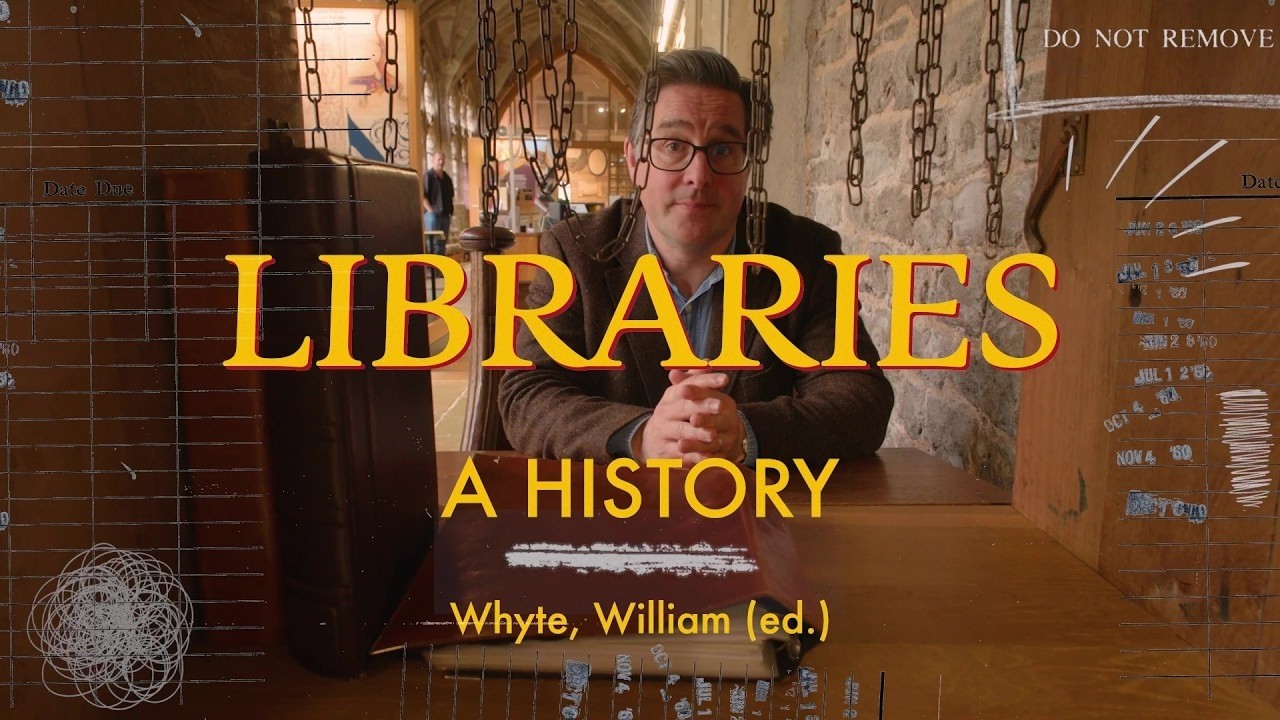
- An Oxford-Centric View of The History of Libraries
Prof William Whyte takes us on a journey from the earliest libraries (i.e. a box) through to gleaming 21st-century symbols of learning.
- Upbeat News Thursday
What better way to start the day than with a global collection of upbeat news nuggets? La Chiena Water Festival Cooling Off No one’s safe from getting buckets of ice water dumped on them during La Chiena, a centuries-old festival in Campagna, a town near Salerno, Italy. During the summer, the town diverts the Tenza River through an ancient artificial canal, sending its waters rushing directly through the historic centre. The tradition started as a way to clean and cool the streets in the 1700s and has since turned into a splashy summer celebration that takes place every weekend from mid-July to mid-August. Around midday, the town comes alive with La Passeggiata ('The Walk'), as a lively crowd of locals and visitors wades through the gently flowing waters, while others take in the spectacle. The festival shifts into high gear later in the afternoon with La Secchiata ('The Bucket Event'). Armed with buckets and water balloons, participants line the streets for a lively battle soundtracked by high-energy DJ sets. The celebration culminates at midnight with a Chiena di Mezzanotte. Flooding the town's historic streets one last time, this grand finale sets a spectacular backdrop for music, dancing, and midnight revelry. Credit: Dusty Crum Strange But True “As far as Dusty Crum is aware, his Florida restaurant is the only pizza place in the world that accepts invasive Burmese pythons as currency,” said the CBC. The self-described “swampepreneur” is supporting the state’s attempts to eradicate the invasive snakes by offering a large pizza in exchange for each carcass. Python-hunting is already a lucrative business in Florida: the annual state-sponsored cull, the Florida Python Challenge, offers a $10,000 prize to the year’s top hunter. Credit: WUOZ Gdańsk Deliberately Upright A metal detectorist has stumbled upon the sword standing hilt-up in the dirt during a survey in the Gdańsk Forest District, outside the Polish port city. The sword has since been excavated and dated to between 700BC and 900BC. “The upright position suggests the sword was deliberately deposited rather than accidentally lost,” said Archaeology News, with one theory suggesting the weapon was a ritual offering. The sword measures about 60 cm (24 inches) in length and belongs to the tang-hilted type. Weapons like this ranked among the most valuable possessions of their time in the late Bronze Age. According to Poland’s State Forests, a bronze sword of this kind could equal the value of an entire herd of cattle, making ownership a sign of wealth and high social standing. Germany, the birthplace of the automobile Seeing The Light For the first time, battery electric vehicles were the most popular powertrain in Germany in June, setting a new sales record as the birthplace of the automobile moves forward into the next stage of its evolution. EV sales have been spiking lately, adding to their continual rise since the inception of the modern EV industry. Growth has been especially significant this year as countries respond to a stupid oil war and realize that perhaps it’s finally time to get off this resource that we’ve always known we should get off it. Right now, the part of the world that’s seeing the largest rise in EV sales is Europe. And within Europe, its largest car market, Germany, is finally seeing the light. Extraordinary Coincidence: An unrestored 1956 Mercedes-Benz 300 SL ‘Gullwing’ - which many say is the greatest sports car ever - went to auction with a remarkable back-story. Benefits of restricting social media access Wellbeing Boost Teenagers who took part in a trial which restricted their social media access have reported improvements in sleep, concentration and wellbeing. The trial, commissioned by the UK government, involved 309 households which were assigned to one of three interventions for a month: an outright social media ban, a 9pm to 7am social media curfew and 15-minute daily limit for social media. The trial found that all groups reported improvements in sleep, mood, concentration, study time and family interaction. The results chime with a separate study examining the impact of the Netherlands’ school smartphone ban. Some three-quarters of schools reported a boost in students’ concentration, while nearly two-thirds noted an improvement in the “social climate”. Clean Cooking African countries secured $900 million in new financial commitments to expand access to clean cooking technologies which replace polluting fuels with cleaner alternatives. The new pledge builds on the $2.2 billion mobilized at the inaugural Africa Clean Cooking Summit in Paris in 2024, bringing total commitments to more than $3.1 billion. The transition reduces harmful household air pollution and improves health outcomes for millions of African households. “The only real stumbling block is fear of failure.” Julia Child On This Day 23 July 1829: William Austin Burt patents America's first typewriter, the typographer. The wooden, box-shaped device used a dial and a lever mechanism instead of a keyboard to stamp inked letters onto paper. Unfortunately, the machine failed to achieve market success because it was too slow for practical office demands of the era. Today's Articles Amateur Sleuth: Canadian discovers huge new meteorite crater whilst perusing Google Maps. "Kind of Miracle": Paris is harnessing the Seine in order to replace air-con. 20 Simple Ideas: Recommendations on how to improve your life without really trying. Joys of Summer: A dozen uplifting quotations about the joys of summertime. Mood Boosting Video Crazy Battle: One small shark and a sky full of hungry eagles.
- Paris is Harnessing The Seine to Replace Air-Con
Described as a "kind of miracle", the French capital is tripling its system of underground pipes that distribute chilled river water, reducing need for individual cooling units. Fraîcheur de Paris will help the city reach its net zero target As temperatures rise, most cities are reaching for a familiar fix of more air conditioning. But in 1990s Paris, with remarkable foresight, planning began for a different kind of solution: one of the world’s largest district cooling networks, known as Fraîcheur de Paris. “It’s a kind of miracle solution in the era of global warming,” says Thibauld Voïta, an energy and climate expert and adviser at the Jacques Delors Institute. The system has 120kms (75-miles) of underground pipes distributing chilled water to museums, offices, hospitals, schools and other public buildings including the Louvre, the Grand Palais, and some luxury hotels and office districts. Instead of thousands of individual air-conditioning units, cooling is produced centrally and shared across the city like a utility. Credit: in:Expeditions The system circulates cold water through a network of pipes: cold river water from the Seine is pumped through one pipe, which runs right next to a secondary pipe carrying warm water from the city’s buildings. A thin metal wall separates them and a heat exchanger allows the heat from the warm city water to enter the cold Seine water without the fluids ever touching. It is similar to holding a cup of hot tea in a bowl of cold water - the liquids don’t touch, but the tea cools down. That cooler water is then circulated through the buildings connected to the system and the Seine water is returned to the river slightly warmer than before. The hope is that Fraîcheur de Paris will stop at least some of the 2.1 million people who live in Paris from buying an air conditioner. Source You may also be interested in... Paris Urban Forest Plan to Cover Half the City: A new Paris urban forest plan aims to reduce temperatures, increase flood resilience, and lower carbon emissions. Remarkable Reduction in Congestion and Pollution: Are cities for the pleasure of the people (including their health and quality of life) or the unrestricted domain of vehicles? In Paris, it's most certainly the former.
- Crazy Battle: One Small Shark And a Sky Full of Hungry Eagles
"I've watched eagles catch hundreds of fish but I've never seen them grab a shark and toss it back and forth like this."