
Advance in Climate Attribution Science Worries Big Oil
In good news for plaintiffs fighting fossil fuel companies for their harmful emissions, scientists can now draw a straight line from a single oil company’s emissions to a specific disaster.
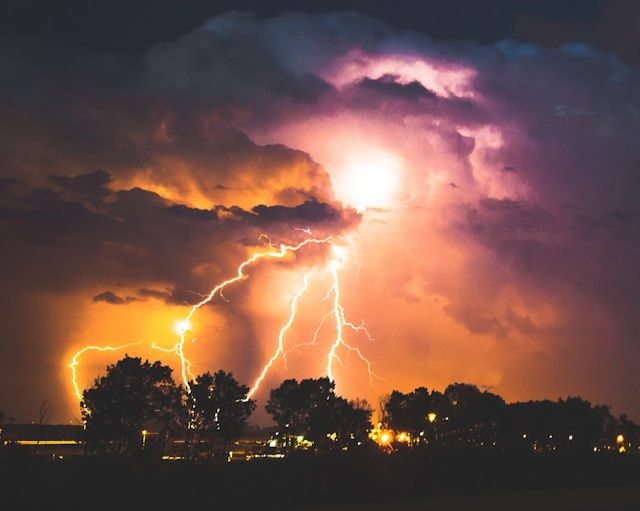
Remarkably, scientists have gone beyond providing a rough estimate of the industry’s overall contribution, and can now identify a specific company, a specific event, and a specific percentage.
That’s what a new peer-reviewed study published in Earth’s Future has achieved, and it's stirring alarm in fossil fuel industry board rooms. Because, until now, Big Oil's defence in climate lawsuits (and there are a great many pending against them) has always been that causation is impossible to prove. Hopefully, not any more, thanks to Christopher Callahan’s work appearing to punch a hole in that specious argument.
Callahan, an Earth systems scientist and assistant professor at Indiana University’s O’Neill School of Public and Environmental Affairs, ran more than 150 simulations across eight different climate models, building a statistical map of the relationship between atmospheric CO2 and the odds of extreme heat and rainfall. He then plugged in historical emissions data from individual companies and countries.
For example, fossil fuel firms increased the likelihood of the 2021 Pacific Northwest heat wave by 31 percent. They raised the probability of Pakistan’s catastrophic 2022 extreme rainfall by seven percent. “There is no level of emissions that does not contribute to changing climate impacts,” Callahan said. “Every ton matters.”
The fossil fuel industry has known about its role in warming the planet for more than 50 years. Its long-running response has been to fund doubt wherever the science gained traction. However, Kyle Kohli, writing in Energy In Depth - a publication of the Independent Petroleum Association of America - acknowledged what this science represents for plaintiffs: “Climate attribution research seeks to connect greenhouse-gas emissions to specific climate impacts, and increasingly, to particular industries or companies. That makes it especially valuable to climate plaintiffs attempting to overcome one of their biggest legal obstacles: proving causation.”


