
Fake Bank Notes That Mocked a US President
Whilst Trump is set to become the first sitting US president to have his signature on US banknotes, two hundred years ago President Andrew Jackson was lampooned for his terrible banking policy by “the most unhinged banknote ever printed.”
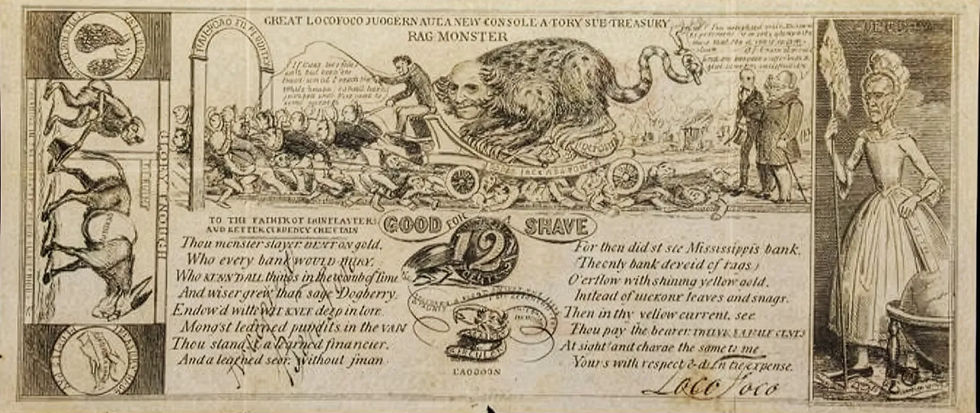
The valuable paper bill is a Great Loco Foco Juggernaut, named after the Locofoco Party. This radical wing of the Democratic Party was organized in New York City in 1835. They opposed state banks, paper money, tariffs, monopolies, and financial policies that they deemed antidemocratic and conducive to special privilege. The unofficial bank note satirizes the Panic of 1837, a major economic depression largely caused by President Jackson, America's seventh president. An example of this historic note has just been sold at auction for $4,800.
“Andrew Jackson’s opposition to a central bank made state-chartered local banks much more robust players in the growing economy, but their protections were not as robust as the Federally chartered Second Bank of the United States,” John Kraljevich, the Director of Numismatic Americana at Stack’s Bowers Galleries who auctioned off this banknote, tells Popular Science.
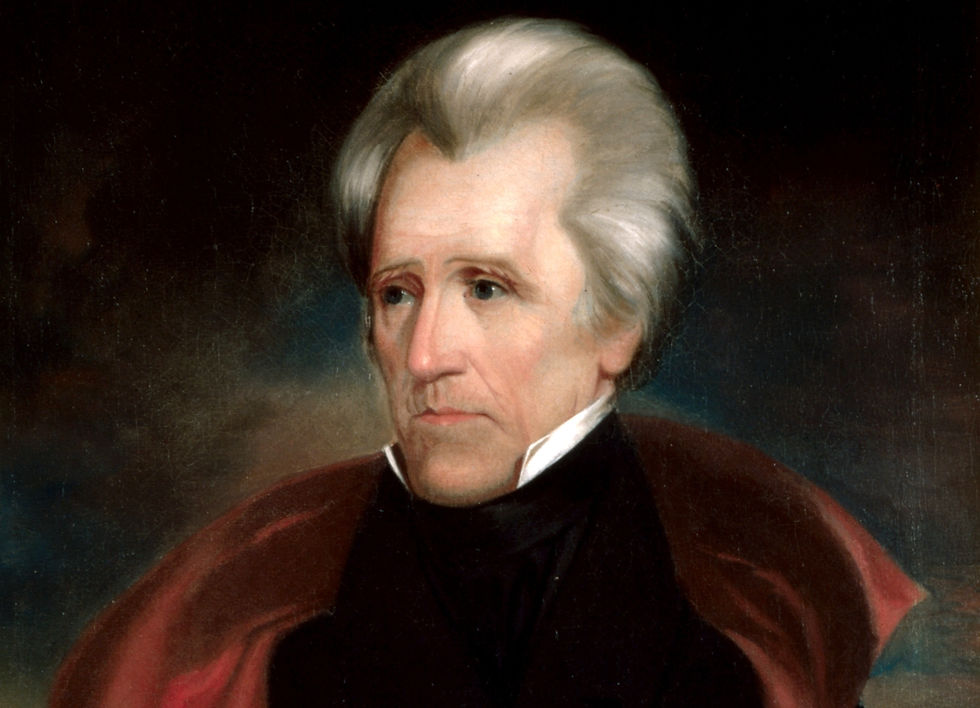
Simply speaking, the president gave the less regulated banks more control, which led to several misguided loans as more Americans settled in the west. Remember the banking disaster in 2008? Well, this story from the 1830s has a similar feel as speculators were given plenty of credit from these smaller banks to purchase land in the western United States. All of that easy credit and paper money exceeded how much cash they had on hand and “when the federal government insisted on payment for land in gold or silver, many of those bank loans went bust, banks went under, and specific payments, [which are] payments from banks in gold and silver, were suspended,” Kraljevich explains.
As a result, the circulating money supply was made of unbacked paper money with no real value. The bills were often called shinplasters, in reference to how they were put inside of boots to keep the feet dry. “They were as worthless as the satirical notes that imitated them and lampooned the policies that created them,” says Kraljevich.
On March 28, 1834, the United States Senate voted to censure U.S. president Andrew Jackson over his banking policies. This is the only time in which the U.S. Senate has censured a president and "remains the clearest case of presidential censure by resolution" in either chamber of the United States Congress - no other president has had an explicit censure resolution adopted against them


