
Fragment of Homer's ‘Iliad’ Found in 1,600-Year-Old Egyptian Mummy
In the ancient Egyptian city of Oxyrhynchus, archaeologists recently discovered an ancient tomb with several mummies inside. One containing something rather extraordinary.
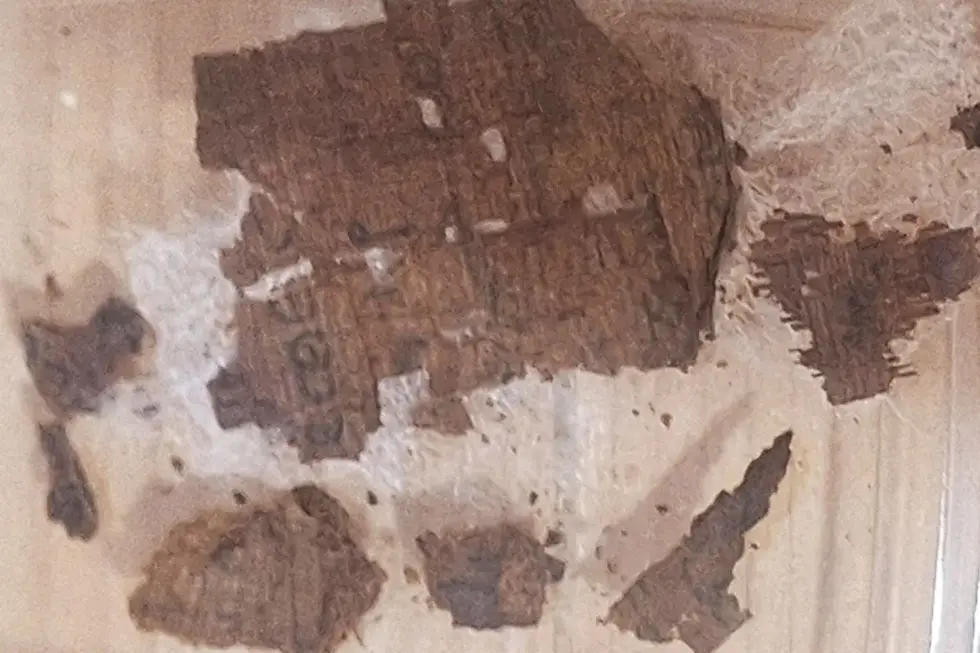
Some of them were decorated with gold leaf or geometric patterns - features commonly found in burials of this kind. But one of them was unearthed alongside a particularly unusual artifact: a papyrus fragment from Homer’s Iliad, the epic poem set during the Trojan War. The ancient Greek text had been tucked beneath the wrappings on the mummy’s abdomen during the embalming process.
The passage in question comes from a famous section of the Iliad that’s known as the catalog of ships. In Book II of the more than 2,700-year-old text, the narrator calls on the muses, asking them to name the leaders of the Greek forces that sailed to the city of Troy: “For you are goddesses and are in all places so that you see all things.” The remainder of the passage provides a lengthy list of these warriors. A man named Guneus arrived with “two and twenty ships from Cyphus.” Tlepolemus, “son of Hercules, a man both brave and of great stature,” brought nine ships from Rhodes. And so on.
“The fact that in this case the text, in Greek, refers to a literary text is truly novel,” say Maite Mascort and Esther Pons, who lead the Oxyrhynchus Archaeological Mission. “We are currently studying and proposing various hypotheses.”
In antiquity, Egyptian culture was heavily influenced by Greek and Roman traditions. When Egypt came under the rule of Alexander the Great in 332 B.C.E., Greek became the primary language used in government documents. Egypt became a Roman province in 30 B.C.E., after the Roman emperor Octavian defeated Mark Antony and Cleopatra.


