
Highest-Ever Resolution View of The Sun
Scientists have captured the most detailed images yet of our star’s surface, 93 million miles away.
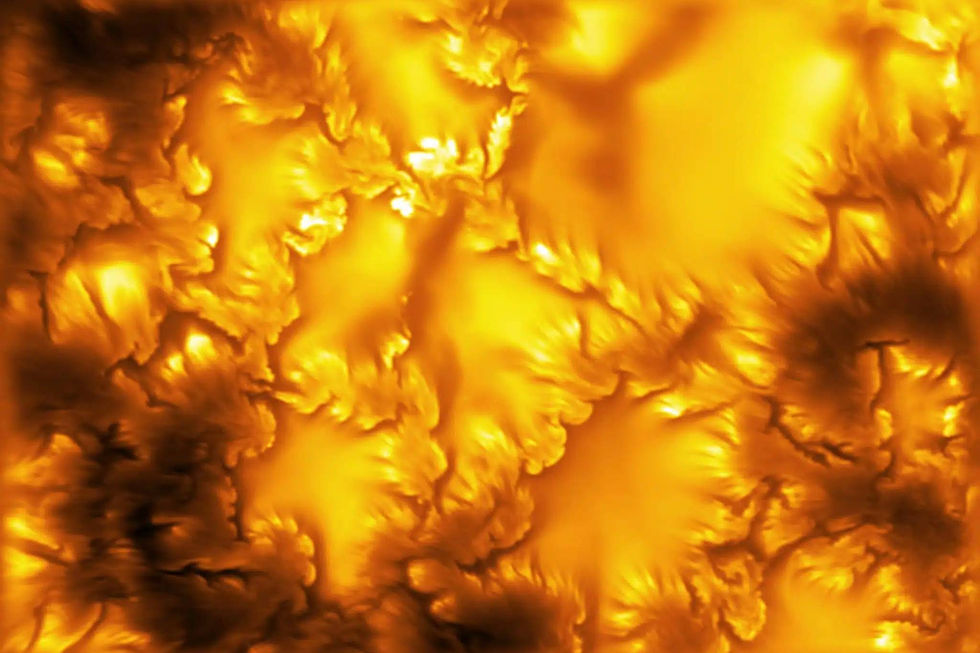
Scientists using the world's most powerful solar telescope have captured the surface of our sun in new, unprecedented detail, reports BBC News. Images and footage show "whirlpools" of activity that it has not been possible to see before.
The unprecedented views of swirling textures and ripples on the sun were serendipitously captured by the National Science Foundation’s Daniel K. Inouye Solar Telescope during a test run of the scope, which is located on the Hawaiian island of Maui. “My first reaction was: ‘Wow, how can we see such tiny, fine-scale structures on the sun?’” David Kuridze, a co-author of a study on the findings, told The Guardian. “This is something we have never seen before in any solar observations.”
The study concluded that the ripples are caused by bits of magnetized plasma moving past each other at different speeds, reminiscent of ocean waves breaking in windy conditions. While this phenomenon has been captured on Earth and other planets, its confirmed presence on the sun is new - and could help explain why the star’s outer atmosphere is millions of degrees hotter than its surface.
The new findings are a reminder that the Sun is a "unique laboratory". "It's our closest star," says Dr David Boboltz from the US National Solar Observatory. "And it can help us understand some very basic laws of physics. The first experimental proof of Einstein's general relativity came from solar eclipse observations. So simply for human knowledge," he added, "we need to have experiments like this".


