
Humans Prefer to Turn Counterclockwise But Scientists Don't Know Why
If you were asked to stand up and walk in any direction, which way would you go?
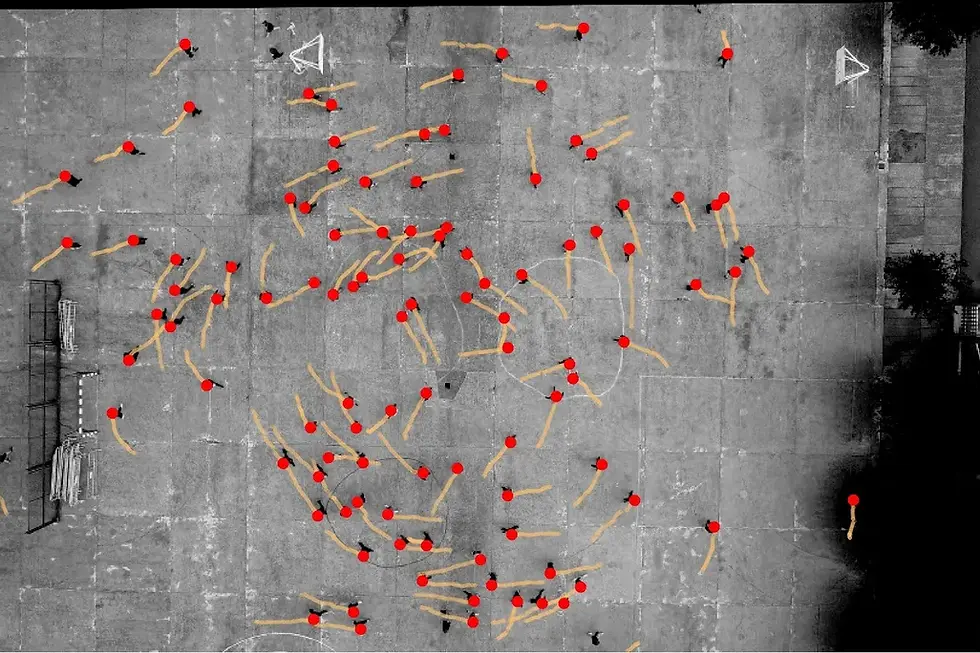
According to new research, regardless of if you are right-handed or left-handed, you are most likely to turn in a counterclockwise direction - and researchers have no idea why. The tendency initially came to light in an unexpected way during the ghastly days of the Covid pandemic.
While researching social distancing behaviours, scientists wanted to see how many people could easily walk in an enclosed space while still being apart from each other. When they reviewed their video footage, however, they noticed something surprising and peculiar.
“My colleagues realized by chance, that in 32 out of 33 experimental trials, as people moved and turned, they noticeably preferred to turn counterclockwise,” says Claudio Feliciani, who studies crowd control at Waseda University in Tokyo. “This was completely unexpected as, at least instinctively, when people walk around randomly, you imagine people turn as their needs suit them with little sign of an overall preference.”
Feliciani and colleagues tested different walkers in groups of different sizes within varying environments. They observed that almost everyone preferred counterclockwise turning. Isolating certain variables, including gender and culture, barely moved the needle. The only notable, albeit small, difference they found was that the effect was stronger in younger people.
Importantly, “our findings demonstrate that this phenomenon arises from individual behavior rather than collectively emerging due to pedestrian-pedestrian or pedestrian-boundary interactions,” the team writes in the study. “We ruled out some of the most obvious individual symmetry breaking factors - such as handedness, footedness and eye dominance - thus leaving the precise origins of this intriguing behavior open for further investigation.”


