
Monday's Upbeat News
Kick-starting the week with a global selection of upbeat news nuggets.

“Birdie in the Sky”
The International Aerial Photographer of the Year competition has announced the winners of its second edition, after receiving 1,587 entries from photographers around the world. Judges awarded the Photograph of the Year title for a single standout image to Vitaly Golovatyuk, whose mesmerizing photograph creates the illusion of a lone bird floating in midair. Captured at Elk Park in China’s Zhejiang Province, the image shows a bird resting on a perfectly still lake encircled by brilliant red vegetation. Because the water reflects the sky with remarkable clarity, the bird appears suspended in open space. Golovatyuk spent several days scouting the location at sunrise and sunset before capturing the scene.
Some Good Numbers
51 Million: Estimated number of lives saved by vaccines in Africa over the past five decades, reports the WHO.
25%: Solar power reached a new milestone across Europe last month, generating a record 52 terawatt-hours (TWh) of electricity and supplying a quarter of all electricity used in the European Union in June 2026, says Ember.
3.65 Million: Number of heat pumps purchased in the US in 2025, nearly outselling conventional air conditioners, says Canary Media.
11%: The world continues to grow richer, with only 11 percent of countries now classified as low income. Related: There has been a 40 percent drop in the number of economies with high inequality over the past three decades, according to the World Bank.

Ocean Protection
Bloomberg Philanthropies has identified a funding shortfall in the implementation of many countries’ ocean protection plans, and has attempted to fill it with a quarter-billion dollar donation. The aim is to translate the paper gains for ocean conservation and management secured with the passage of the UN’s new High Seas Treaty into real gains by helping to cover the cost of management and enforcement for small island nations that lack these resources. This support will help countries advance ocean protections and manage them effectively, while the initiative will also expand the use of satellite monitoring, artificial intelligence, and public data platforms to improve transparency, accountability, and decision-making across the global ocean.
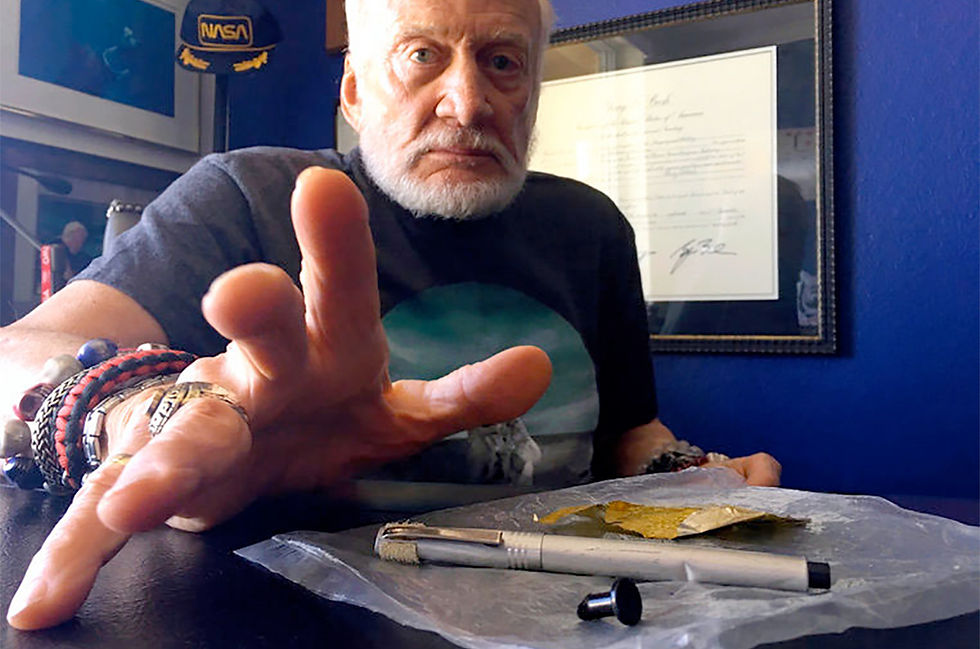
One Small Pen
The felt-tip pen Buzz Aldrin used to fix a broken circuit-breaker and escape from the moon in 1969 has sold at auction in New York for more than $850,000. The dented silver plastic Duro Rocket pen - used by the second man on the moon to save Neil Armstrong and himself from being “stuck on the moon for ever” - had a sale price estimated by Sotheby’s at between $800,000 and $1.2m and went for $857,600 after being pursued by five bidders. The victor got the broken piece of circuit breaker, too, as part of the lot. Both came from Aldrin’s personal collection.

Pub Quiz Question
Which country has the longest coastline? Well, it depends on what you include. Expert Stuart Blackman says 'Coastlines' are tricky to pin down. Do you measure them around every tiny inlet? Every jutting rock? At the high- or low- tide line? The answer to this is key. Estimates for any given country vary wildly. The coast of Norway, for example, is listed as the second longest (83,281km) by the CIA’s World Factbook, but only the seventh longest (53,199km) by the World Resources Institute (WRI). The longest coastline of all - measuring 202,080km (according to the CIA) or 265,523km (as stated by the WRI) - belongs to Canada, a big country with very crinkly edges and many offshore islands. It's surrounded by three oceans: the Arctic ocean, Atlantic ocean and Pacific ocean. So, now you know.
“Poetry is like standing on the edge of a lake on a moonlit night and the light of the moon is always pointing straight at you.” Billy Collins
On This Day

20 July 1793: Scottish explorer Alexander Mackenzie completed the first recorded transcontinental crossing of North America north of Mexico by a European. Preceding the Lewis and Clark expedition by over a decade, his gruelling overland route via the Peace River and Canadian Rockies successfully reached the Pacific Ocean. To commemorate the exact spot where he arrived at the ocean, Mackenzie famously painted a message on a rocky shore using a mixture of vermilion and bear grease: "Alexander Mackenzie, from Canada, by land, twenty-second of July, one thousand seven hundred and ninety-three".
Today's Articles
World's Biggest Bird Nest: An extraordinary collaborative effort, constructed and maintained by a single species from southern Africa.
Mood Boosting Video
Major New Design: A brief history of Windsor Castle's Venus Garden.


