
Scientists Decipher Fragments of 2,000-Year-Old Philosophical Treatise
The papyrus manuscript was part of a vast library preserved by volcanic ash after Mount Vesuvius’ eruption in AD 79.
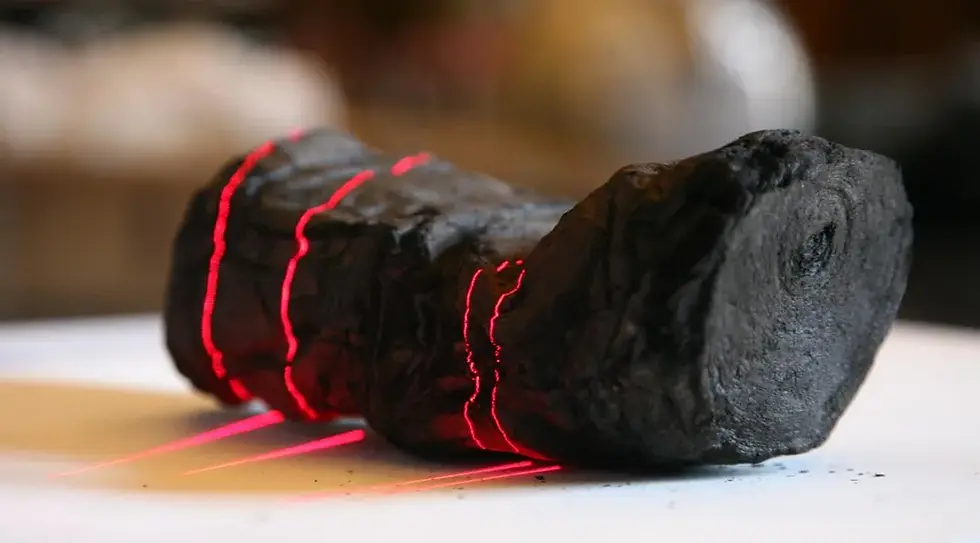
On the fateful day that Mount Vesuvius, volcanic ash buried a vast library in the Roman town of Herculaneum. The hundreds of papyrus scrolls trapped inside were only rediscovered more than 1,500 years later, in the mid-18th century. But when scholars tried to unroll them, the carbonized manuscripts crumbled to dust.
Every generation since then encountered the same dilemma: They could wait for technology to advance, abandoning hope of reading the ancient texts in their own lifetime. Or they could try to open the scrolls themselves - and risk destroying them.
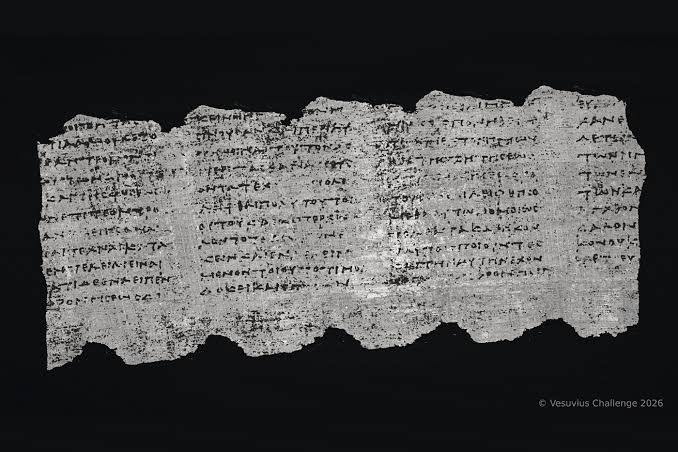
Now, finally, technology has advanced sufficiently to enable researchers to use advanced imaging and artificial intelligence in order to, remarkably, decipher the scrolls without needing to unroll them at all.
The Vesuvius Challenge has accelerated the process by turning it into a public competition, complete with cash prizes. Brent Seales, a computer scientist at the University of Kentucky, and two entrepreneurs, Nat Friedman and Daniel Gross, set up the Vesuvius Challenge, offering more than $1 million in prize money for reaching a series of milestones using “computer vision, machine learning and hard work.”
In 2023, a student won $40,000 for deciphering a single word - “purple” - from an unopened scroll. Later, three students would identify 2,000 Greek characters from one scroll ($700,000) and the title of another ($60,000).
Now, for the very first time, researchers have recovered all surviving text from a single scroll. The nearly five-foot-long segment includes roughly 20 columns of ancient Greek philosophy, accessible for the first time in nearly 2,000 years. Known as PHerc. 1667, this scroll discusses the nature of human knowledge, the ability to distinguish good from evil, and the merits of acting on reason rather than on impulse - ideas central to the philosophy of Stoicism. The manuscript also references Aristocreon, the nephew of the Stoic philosopher Chrysippus.
The Vesuvius Challenge is now offering a $1 million prize to the first person or team to decipher another scroll in full by this time next year.


