This Italian Elixir Was a Precursor to Coca-Cola
An Italian friar has discovered a document from the pharmacy archives of an ancient convent in Florence describing a mid-nineteenth century medicinal potion made from Bolivian coca leaves and kola nuts.
The recipe is remarkably similar to the one used by the American pharmacist, John Pemberton, who in 1886 created a sweet syrup by mixing coca leaf extract and kola nuts. Pemberton’s tonic eventually became Coca-Cola. The initial newspaper ad in Atlanta, Georgia, invited "thirsty citizens" to try the "new and popular soda fountain drink". Though marketed as a "Delicious and Refreshing Beverage," Pemberton also promoted it as a "brain tonic" and a cure for ailments such as headaches, fatigue, and "nervous prostration".
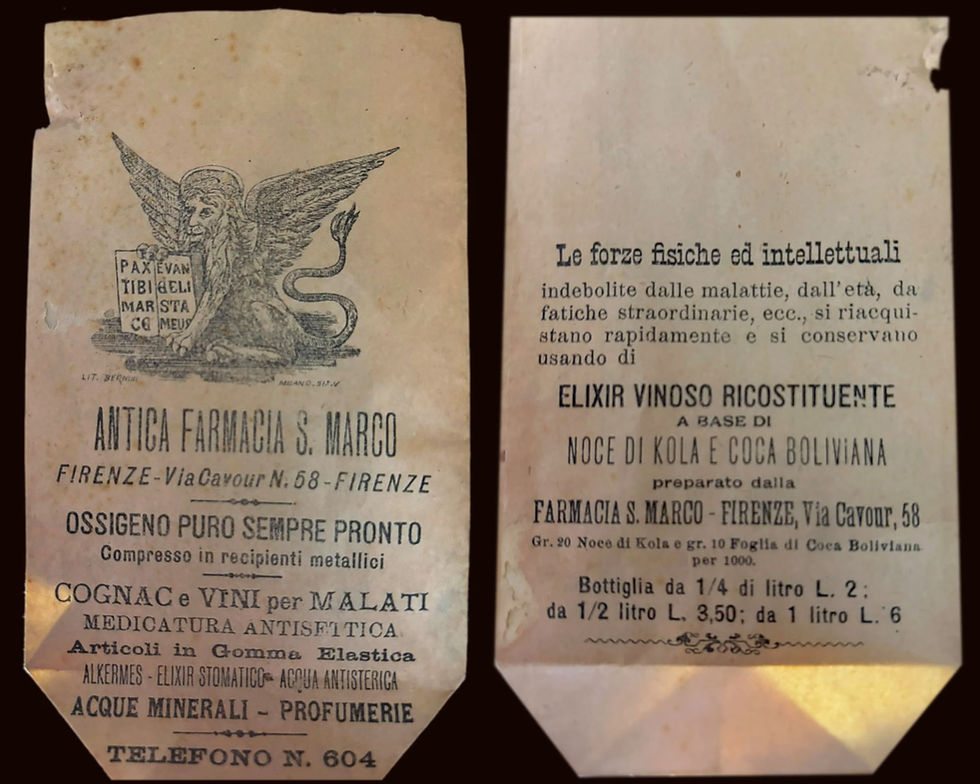
However, two or three decades earlier, a Florentine friars’ similar fatigue-fighting elixir was being touted. This was revealed when Father Manuel Russo, rector of the San Marco convent, stumbled across a yellowed document that appears to have been a sort-of promotional flyer for the drink.
The flyer details the recipe for an elixir vinoso ricostituente, or restorative wine elixir, made with 10g of Bolivian coca leaves and 30g of kola nut, blended with wine, which the friars who concocted it promoted as a tonic to be used to recuperate the body and mind from fatigue caused by illness and ageing. The main difference between Pemberton's fizzy drink and the one promoted in Florence is simply that local alcohol laws prevented Pemberton from using wine, so he combined the ingredients with carbonated water.
As you might expect, once the Italian media got wind of Russo’s discovery, some pondered whether the soft drink’s origins were, in fact, in Florence and not the US. But with no evidence demonstrating a link between the friars’ creation and the Coca-Cola recipe, Russo, who also found a couple of empty bottles that contained the potion, is erring on the side of caution.
“I don’t want to attract a lawsuit from Coca-Cola or something like that,” he joked. “Mr Pemberton invented his own recipe, and without alcohol … Plus at that time other people were producing this kind of medicine with coca leaves. It was quite common in Italy and France. The only thing I can say is that San Marco’s pharmacy had its own recipe.”