
New Form of Life Has Been Discovered in Scotland
Updated: Jan 24
A 370 million-year-old fossil is an entirely new form of life which towered up to 26ft tall, scientists have confirmed.
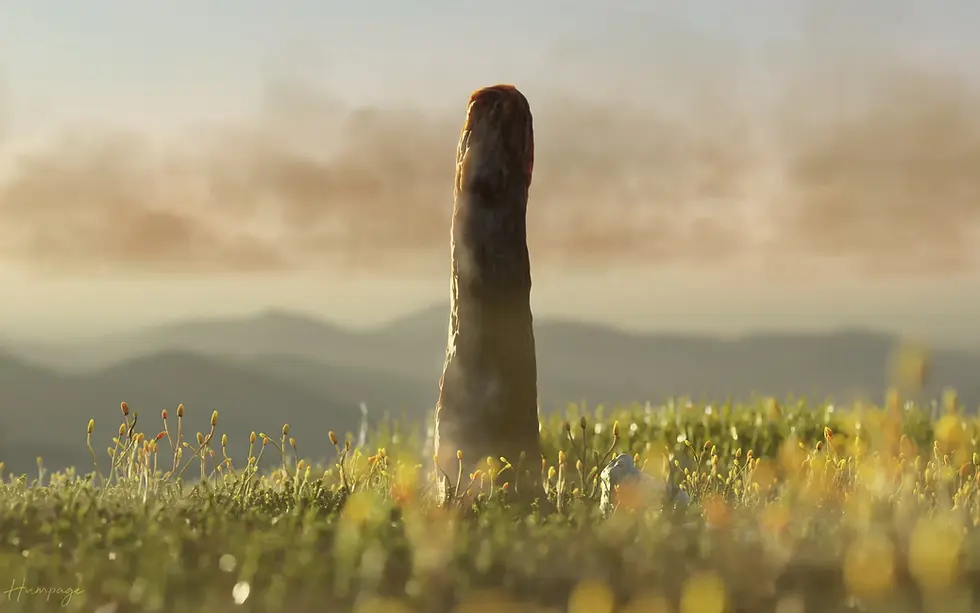
The genus - called Prototaxites - resembled a woody giant tree trunk without a leafy canopy and was originally thought to be a form of fungus. However, researchers from the University of Edinburgh and National Museums Scotland have discovered that the fossil is neither fungus nor plant, but a new lifeform that became extinct around 370 million years ago.
Sandy Hetherington, the lead co-author and research associate at National Museums Scotland, said: “They are life, but not as we now know it, displaying anatomical and chemical characteristics distinct from fungal or plant life, and therefore belonging to an entirely extinct evolutionary branch of life.”
“Prototaxites, therefore, represents an independent experiment that life made in building large, complex organisms, which we can only know about through exceptionally preserved fossils.” The new research has been published in the journal Science Advances.

For the new study, researchers looked at the molecular composition of fossils from 407-million-year-old Rhynie chert, a sedimentary deposit near Rhynie, Aberdeenshire.
Prototaxites dates from the late Silurian to the Late Devonian - 420 to 370 million years ago - a time of remarkable change on Earth’s surface in which plants and animals were starting to gain a foothold and spread. It was the first giant organism to live on the land, dwarfing other plants and animals from the period. A fossil of Prototaxites, a colossal lifeform that once towered over ancient landscapes, is set to go on display at the National Museum of Scotland.
Dr Nick Fraser, keeper of natural sciences at National Museums Scotland, said: “We’re delighted to add these new specimens to our ever-growing natural science collections which document Scotland’s extraordinary place in the story of our natural world over billions of years to the present day."
For a daily dose of good news, why not sign up to OGN Daily? It's free and only takes 5 seconds.


