OGN Wednesday
Mid-week selection of positive news stories from around the world.

Novel Career Choice
Most of us have had a go at building sandcastles at some point in our lives, but our creations probably amounted to little more than a few stacked buckets of sand. For sculptor Janel Hawkins, however, sandcastle building has become a career. She creates elaborate sculptures in all shapes and sizes, and even hosts sand-building classes and events on beaches across Alabama and Florida. Hawkins began making sand sculptures while in college and, over time, honed her skills and gained enough experience to launch her own company, Sand Castle University, in 2017. Today, the business employs a team of five expert instructors and creates custom sand sculptures for events, from architectural forms to company logos.
India Milestone
Joining the European Union and Australia, India’s power system just reached a major milestone. Clean energy sources have now surpassed fossil fuels for the first time.

"Fantastic Moment"
A rare vintage watch discovered hidden away in a late mother’s jewelry box while the family was cleaning out her home has sold for £59,000 ($80,000) at a British auction. The 1930s stainless steel Patek Philippe wristwatch smashed expectations after experts originally valued it at just £5,000. The owner’s daughter remembers her mom once telling her she possessed an expensive watch, but no one expected the Swiss timepiece to be worth almost 12 times its estimate. The auctioneer said afterwards: “The final battle between (bidders in) Japan and China was incredibly exciting. To see the hammer finally fall at £59,000 was a fantastic moment for the family. It is one of those results that reminds you why this business is so exciting."
Peak of High Horology: The watch made for Marie Antoinette in 1783 is considered the greatest ever made.

"Significant Step"
In a big win for southeast Asia, tiny Timor-Leste has defeated the world’s leading cause of infectious blindness - the last country in the region to do so. “The elimination of trachoma from the southeast Asia region is a significant step towards our global target of eliminating trachoma worldwide by 2030,” says the WHO.
El Niño Blog
Former NOAA scientists are reviving a critical El Niño blog after the U.S. government took it offline. It was pulled last summer, when the Trump administration’s DOGE initiative fired all NOAA staff responsible for overseeing climate.gov. The blog tracked all things El Niño and La Niña, offering newly available data collected by the National Oceanic and Atmospheric Administration to the public in digestible language. But thanks to a handful of former NOAA employees, the ENSO blog is making a return. This follows news in July that...
Climate Scientists Fired by Trump Hit Back: Fired US federal workers have revived a defunct climate website - pushing back as the Trump administration escalates cuts to publicly funded science and research.
How Are Your Tires?
California just became the first U.S. state to address a problem most people don’t know they have: inefficient tires. When automakers design a new vehicle, low rolling resistance tires are one of the least expensive ways to improve fuel economy. When they are replaced, the “new” tires are often less efficient, causing traditional vehicles to burn more gasoline and EVs to need more electricity. California’s new rule is “designed to ensure that replacement tires sold in the state are at least as energy efficient" as the original ones. It also establishes a labeling system that gives tires a “leaf” rating, to make it easier for consumers to find the best options. It may astonish you to know that, in addition to saving drivers money, the state projects that the changes could reduce carbon dioxide emissions by 2 million tons annually, which it says is equivalent to taking around 400,000 cars off the road.
"Stuff your eyes with wonder, he said, live as if you'd drop dead in ten seconds. See the world. It's more fantastic than any dream made or paid for in factories." Ray Bradbury, from Fahrenheit 451
On This Day

9 September 1839: English scientist Sir John Herschel created the earliest surviving photograph on a glass plate. The image shows the giant 48-inch aperture telescope built by his father, William Herschel, in Slough, England. John Herschel introduced essential terms like "photography," "negative," "positive," and "snapshot". Glass plate negatives later became standard for professional and astronomical photography.
Today's Articles
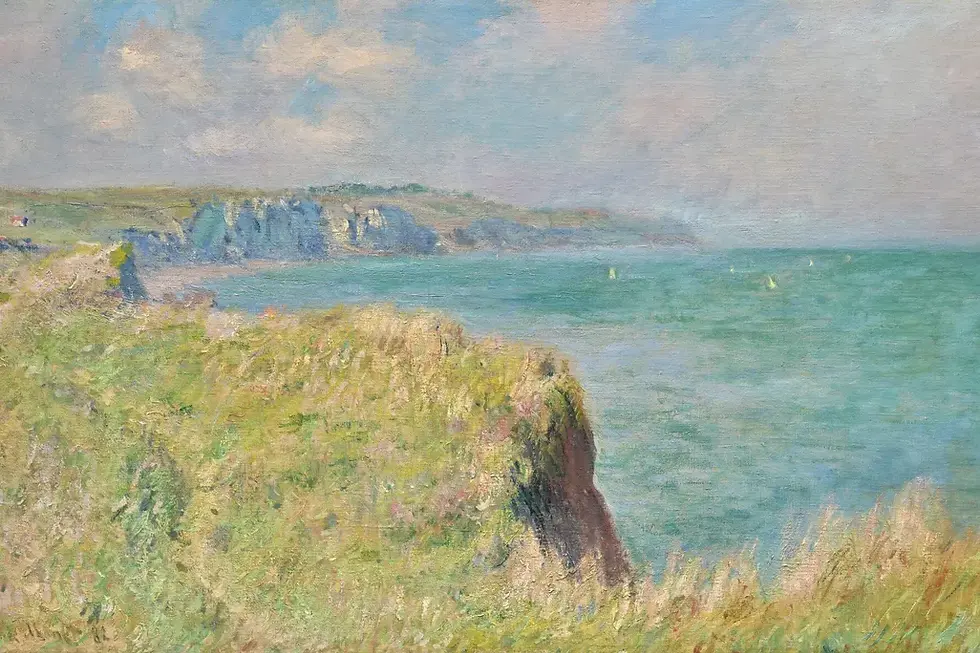
Paul Durand-Ruel: Private collection of the saviour of the Impressionists heads to auction. “Without Durand, we would all have starved," said Monet.
Mood Boosting Video
Style Icon: A brief history of the British tweed suit.